
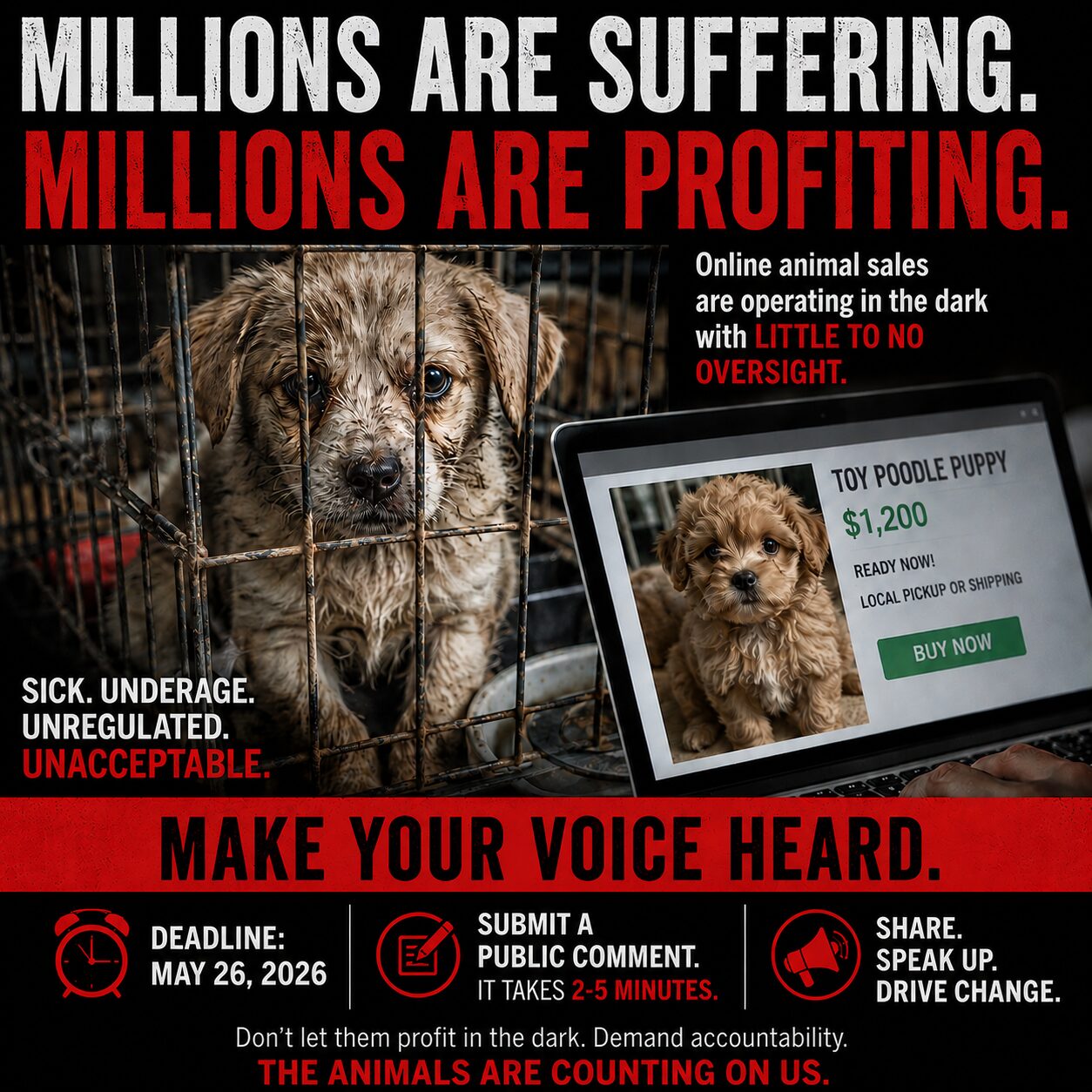
FTC Comment Period on Online Animal Sales Regulation
Why Your Voice Matters
A Rare Opportunity to Address a Root Cause of the Animal Welfare Crisis
The Federal Trade Commission (FTC) is currently reviewing a Petition for Rulemaking that could lead to federal oversight and regulation of online animal sales in the United States.
Public comments are open until May 26, 2026.
This is a significant development for animal welfare advocates, shelters, rescues, ethical breeders, veterinarians, and communities nationwide because online animal sales have largely operated outside meaningful regulatory oversight for years.
Today, millions of animals are sold online through platforms that often require little to no:
- seller identity verification
- licensing validation
- health transparency
- accountability mechanisms
- enforcement standards
As a result, anonymous and unverified sellers can operate at scale while consumers, animals, shelters, and communities absorb the consequences.
The Growing Impact of Unregulated Online Animal Sales
The downstream impact of these gaps has become increasingly visible across the country.
Animal shelters and rescues are facing overwhelming intake pressures. Municipal systems are experiencing rising euthanasia rates and growing financial strain. Consumers are encountering fraudulent or misleading sales practices. Communities are seeing increased public safety concerns tied to poorly bred, improperly socialized, and medically compromised animals.
At the same time, legitimate ethical breeders and responsible organizations are often undermined by sellers operating without oversight or transparency.
The current system effectively externalizes the costs of unregulated online commerce onto:
- shelters and rescues
- nonprofit organizations
- taxpayers and local governments
- veterinary systems
- communities and neighborhoods
Meanwhile, the scale and speed of online animal sales continue to expand.
Why Federal Action Is Being Considered
Existing regulatory frameworks were not designed for today’s platform-based online marketplace environment.
Many online sellers can now operate:
- anonymously
- across jurisdictions
- under misleading classifications such as “rehoming”
- without clear traceability or accountability
The FTC petition seeks consideration of regulatory measures that could include:
- mandatory seller verification
- licensing and permit validation
- animal health disclosure requirements
- platform accountability mechanisms
- stronger enforcement standards
While the rulemaking process is complex and may take time, the current public comment period represents one of the few opportunities for the public and stakeholders to directly influence whether this issue advances at the federal level.
Why Public Comments Matter
Federal agencies evaluate public comments to determine:
- the level of public concern
- the scope and seriousness of the issue
- stakeholder engagement
- whether further regulatory review is warranted
Public participation can play a meaningful role in shaping policy discussions and demonstrating that this issue extends beyond isolated incidents into broader systemic concerns.
Importantly, submitting a comment does not require legal or policy expertise. Individuals, organizations, professionals, rescuers, veterinarians, breeders, advocates, and community members can all participate.
How to Submit a Comment
The public comment period is open until:
 May 26, 2026
Submit comments here:
Final Thoughts
For years, much of the animal welfare conversation has focused on managing downstream consequences:
- overcrowded shelters
- rescue system strain
- euthanasia
- homelessness
- consumer harm
This FTC petition presents a rare opportunity to address one of the major upstream drivers contributing to those outcomes.
Whether meaningful reform ultimately occurs may depend in part on whether the public chooses to engage while the opportunity exists.