Segment One: Doing the Doggy Shuffle

In both 2022 and 2024, we were honored to present at the Texas Animal Control Association Annual Conference. Our 2022 presentation focused on the growing practice of interstate pet transport - commonly known as humane relocation. While the initiative began with good intentions, its evolution has, in some cases, led to concerning outcomes such as puppy trafficking and the rise of retail rescue. Why does this matter? In this first segment of our seven-part series, we trace the origins of large-scale humane relocation efforts, beginning with one of the most pivotal moments in U.S. animal welfare history: Hurricane Katrina. We...Read More

Integrity, Transparency, Accountability: More Than Just Buzzwords

These words are often repeated in our culture, including the animal welfare community - so frequently, in fact, that they risk becoming clichés. But true integrity in animal rescue is not just about using the right language; it’s about action, responsibility, and an unwavering commitment to ethical practices. Integrity in rescue means prioritizing the well-being of animals above reputation, convenience, or personal ego. It requires making difficult decisions with honesty and courage, even when those choices are unpopular or challenging. It means setting aside personal gain in favor of the greater good. Accountability is a fundamental aspect of integrity. Ethical rescues...Read More

Is “No-Kill” Ethical?

Is it ethical for any shelter to turn away animals in need? Some shelters do so daily, but they wear the "no-kill" halo nonetheless. These are also known as "limited-admission" shelters. Our thoughts on this apply to any shelter that turns away animals in need, regardless of the label.Main Issues with "No-Kill"1. It's Misleading: "No-kill" shelters can still euthanize up to 10% of animals and keep the label, which might surprise people. The 90% save rate isn’t based on science - it’s just a number that caught on over time.2. Selective Intake: "No-kill" shelters can (and often do) turn animals...Read More

Denver’s Oldest Animal Shelter is Turning Away Animals

We and our partner TABTO were provided with a copy of a communication from the local animal shelter Denver Dumb Friends League (the League) emailed to select Front Range animal shelters on July 2nd, one day after the policy changes described in the communication went into effect. The following is an analysis and discussion of changes to its operating policies the League communicated in that message. We believe the changes the League has made to its admission policies are harmful to homeless pets, to our communities, and to other animal shelters that serve them. These changes shift responsibility for animals...Read More

Dog Trafficking 101

In Colorado, we’ve got a trafficking problem. We’re not talking about drugs, or people, or other illicit things - we’re talking about homeless animals, specifically dogs. Every year, tens of thousands of dogs, mostly puppies, are collected and transported by Colorado animal rescues and shelters from states like Texas, New Mexico, and Oklahoma, where pet overpopulation is a significant problem.Colorado Canine Importation by the NumbersFrom 2021 - 2023:197 animal rescues reported having taken in homeless dogs, of which 80% took in dogs from outside Colorado.The 10 largest of these animal rescues imported more than 30,000 dogs into Colorado from other...Read More

Community Impact on Sheltering Outcomes

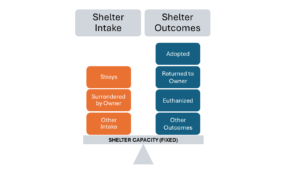
Challenges Faced by Shelters: Many shelters face ongoing challenges due to high intake rates relative to their capacity, making euthanasia a pragmatic but emotionally challenging reality. Advocacy for animal welfare, public education, and community involvement are crucial in addressing these issues at their root causes. Community Responsibility: About 80% of dogs entering shelters come from owner surrenders or are strays brought in by the public or animal control. This underscores that communities have a significant impact on the number of animals shelters must accommodate. Outcome Statistics: Similarly, around 80% of dogs leaving shelters do so through adoptions or owners reclaiming...Read More

The State of Canine Welfare

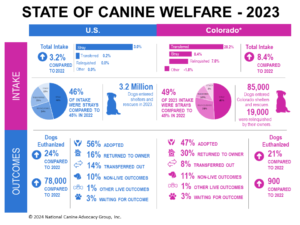
THE ASKInform, educate, generate creative solutions, and share your knowledge. Knowledge is power and you are powerful!2023 was not a good year for dogs in Colorado or nationally. Shelter intake is up, adoptions are down, and euthanasia is on the rise. We cannot change the past that got us to this desperate point, but we can change the future! 70% of dogs entering shelters nationwide are either STRAYS or OWNER RELINQUISHMENTS. By reducing this number, we can significantly reduce the rate of euthanasia in our shelters. Here’s what you need to know. STRAYS: Dogs can roam far from home and,...Read More