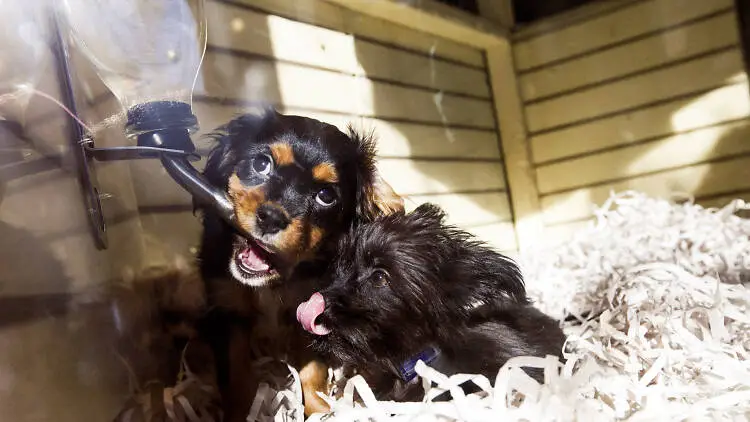
Segment Five: Defining Retail Rescue-When Profit Masquerades as Compassion

In this fifth segment of our seven-part series, we take a closer look at retail rescues - organizations that present themselves as traditional rescues but operate more like unregulated pet dealers. One defining attribute of retail rescues is their participation in puppy trafficking, as explored in Segment Four. These organizations often rely on a constant supply of highly adoptable puppies, imported across state lines, and marketed to well-meaning adopters. Behind the scenes, however, many retail rescues prioritize volume and revenue over the welfare of the animals they claim to save. This segment breaks down the common characteristics of retail rescues...Read More

Segment Four: Puppy Trafficking-When Greed Takes Over

In this fourth segment of our seven-part series, we take an in-depth look at puppy trafficking—a troubling trend in which some rescue organizations collect large numbers of puppies and resell them across state lines. While marketed as “rescue,” these operations are often profit-driven and, in some cases, involve stolen pets being sold under false pretenses. This segment explores how the line between ethical rescue and commercial enterprise can blur, particularly when oversight is lacking and financial incentives take priority over animal welfare. As with previous segments, our presentation traces the evolution of humane relocation and its unintended consequences, connecting historical...Read More

Segment Three: The Downsides of Mass Relocation

In this third segment of our seven-part series, we examine the downsides of mass animal relocation—how it often fails to address the root causes of pet overpopulation and raises public health concerns through the potential spread of disease. Our presentation follows a clear trajectory: from the origins of large-scale relocation efforts to their unintended consequences. As we explore the data, we begin to see how even well-intentioned practices can contribute to troubling trends, including puppy trafficking and the commercialization of rescue - what we now refer to as retail rescue. This segment is part of a larger journey connecting a...Read More

Segment Two: Mapping the Movement: The Scale of Humane Relocation in the U.S.

In this second segment of our seven-part series, we take a data-driven look at the scope of humane relocation efforts across the country. Which states are exporting the most dogs? Which are importing them? And how do these movements impact euthanasia rates in source communities? Our presentation follows a clear path: beginning with the origins of large-scale relocation, we explore the practice’s growing prevalence and its unintended consequences. As we move through the data, we also lay the groundwork for understanding how well-intentioned efforts have contributed to the rise of puppy trafficking and the commercialization of rescue - what we...Read More

Segment One: Doing the Doggy Shuffle

In both 2022 and 2024, we were honored to present at the Texas Animal Control Association Annual Conference. Our 2022 presentation focused on the growing practice of interstate pet transport - commonly known as humane relocation. While the initiative began with good intentions, its evolution has, in some cases, led to concerning outcomes such as puppy trafficking and the rise of retail rescue. Why does this matter? In this first segment of our seven-part series, we trace the origins of large-scale humane relocation efforts, beginning with one of the most pivotal moments in U.S. animal welfare history: Hurricane Katrina. We...Read More

Labels Are Killing Our Nation’s Pets

  The Bissell Pet Foundation is one of the nation's largest supporters of pet animal welfare in our country. They provide shelter grants and fund numerous important programs like: spay & neuter, crisis & disaster relief, vaccinations & microchipping, education, and much, much more. When an organization like this speaks out about the negative impact "No-Kill" / "High Kill" labels are having on animal welfare, it's worth paying attention. The "Kill" Label is Killing Our Nation's Pets

A Dog is for Life

It's heartbreaking to see someone give up their beloved dog, but it's often easier for those with weaker bonds with their dogs.   A strong bond begins the day the dog is adopted, which makes proper owner-dog matching essential. Many shelters and rescues work closely with adopters to ensure the dog fits their current and future lifestyle, but ultimately the adopter must make the choice they believe is right for them. With dogs living an average of 10-13 years (up to 15 for smaller breeds), the right adopter should be able to commit for the long term. If not, the...Read More

Integrity, Transparency, Accountability: More Than Just Buzzwords

These words are often repeated in our culture, including the animal welfare community - so frequently, in fact, that they risk becoming clichés. But true integrity in animal rescue is not just about using the right language; it’s about action, responsibility, and an unwavering commitment to ethical practices. Integrity in rescue means prioritizing the well-being of animals above reputation, convenience, or personal ego. It requires making difficult decisions with honesty and courage, even when those choices are unpopular or challenging. It means setting aside personal gain in favor of the greater good. Accountability is a fundamental aspect of integrity. Ethical rescues...Read More

Is “No-Kill” Ethical?

Is it ethical for any shelter to turn away animals in need? Some shelters do so daily, but they wear the "no-kill" halo nonetheless. These are also known as "limited-admission" shelters. Our thoughts on this apply to any shelter that turns away animals in need, regardless of the label.Main Issues with "No-Kill"1. It's Misleading: "No-kill" shelters can still euthanize up to 10% of animals and keep the label, which might surprise people. The 90% save rate isn’t based on science - it’s just a number that caught on over time.2. Selective Intake: "No-kill" shelters can (and often do) turn animals...Read More

Colorado Pet Store Ban Does More Harm Than Good

Last week, the City of Fort Collins, Colorado passed an ordinance prohibiting the sale of dogs and cats in pet stores. (Or should we say “store” since there is only one operating pet store in the City.) We’ve written our arguments against shutting down and banning retail pet stores before, but they’re worth repeating. 1. There is NO EVIDENCE banning pet stores improves the lives of dogs and cats in large-scale commercial breeding facilities (“puppy mills”). 2. Banning lawfully operated businesses such as pet stores sets a precedent for government impingement on a free market economy. 3. When businesses are...Read More