
PACFA PERFORMANCE AUDIT INITIATIVE
Why PACFA Needs Another Look
Are Colorado’s animal welfare regulations being effectively enforced?
Colorado’s Pet Animal Care and Facilities Act (PACFA) establishes standards for thousands of licensed animal care facilities. But regulations alone cannot protect animals. Effective inspections, investigations, enforcement, and public accountability are essential.
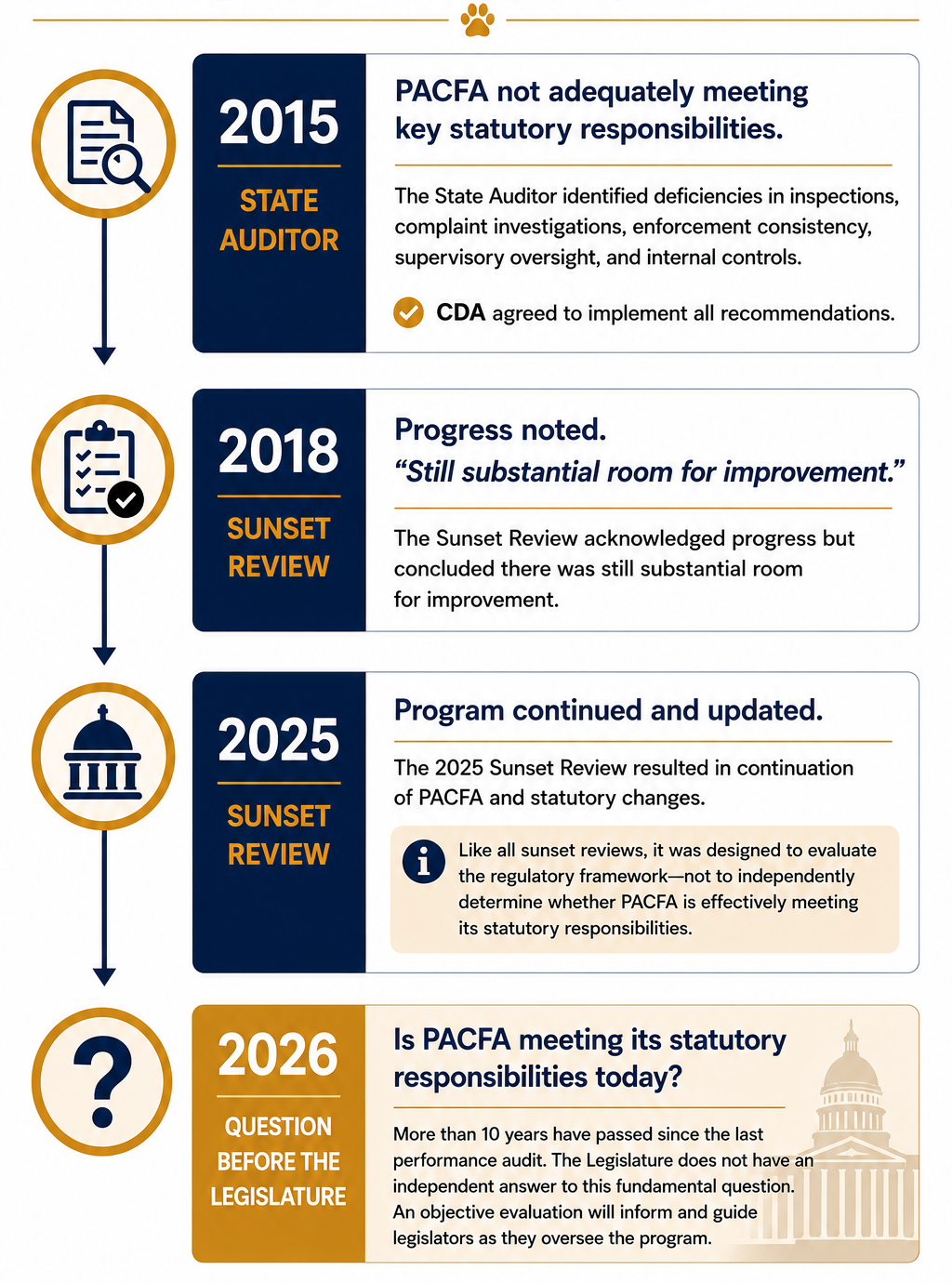
In 2015, Colorado’s Office of the State Auditor identified significant weaknesses in PACFA’s administration. Although the Colorado Department of Agriculture reported implementing the audit’s recommendations, subsequent reviews and documented incidents continued to raise questions about the program’s effectiveness.
In 2026, National Canine Advocacy Group pursued a new independent performance audit to determine whether PACFA was meeting its statutory responsibilities.
Ten Years Later — Is PACFA Meeting Its Responsibilities?
Why Another Audit?
Our request was grounded in PACFA’s published performance information, documented incidents, and questions about how the program carries out its responsibilities.
Inspection Coverage and Follow-Through
- We questioned whether licensed facilities were being inspected frequently enough, whether repeat violations received appropriate enforcement responses, and whether corrective actions were verified.
- A particularly troubling example involved a licensed breeding facility in Delta, Colorado, where more than 160 dogs were removed in June 2025 following years of documented violations.
Complaint Investigations
- Changes in PACFA’s reported complaint-related inspection activity raised questions about how complaints were evaluated, prioritized, and investigated.
- We sought independent examination of whether complaint-handling practices were consistent, timely, and effective.
Unlicensed Operators
- Serious incidents involving potentially unlicensed animal care operations raised concerns about PACFA’s ability to identify businesses operating without required licenses and take timely, appropriate action.
Public Transparency
- PACFA did not routinely publish detailed information about complaints, investigations, inspections, and enforcement actions in a manner that allowed the public to readily assess the program’s performance.
Together, these concerns warranted an independent assessment of whether PACFA’s existing regulatory responsibilities were being fulfilled.
What Did the State Auditor Conclude?
In February 2026, Representative Ty Winter submitted the audit request to Colorado’s Legislative Audit Committee. The committee authorized the Office of the State Auditor to conduct preliminary research.
On April 15, 2026, the State Auditor issued a memorandum concluding that a performance audit could be conducted.
The proposed audit could examine four fundamental questions:
Is PACFA meeting its statutory obligations for inspections, investigations, and enforcement, including consistent and proportionate responses to violations?
Is PACFA effectively identifying and addressing unlicensed operators?
Does PACFA provide sufficient public transparency about its regulatory activities?
Are staffing and resources appropriately aligned with the program’s responsibilities?
The State Auditor also noted that the 2025 PACFA Sunset Review had not directly addressed the concerns raised in the audit request.
The preliminary research established that an independent audit was feasible. It was not a completed audit and did not establish findings about PACFA’s current effectiveness.
What Happened in the Legislature?
On August 10, 2026, the Legislative Audit Committee considered whether to authorize the proposed performance audit.
The vote ended in a tie. The audit was not authorized.
The committee’s decision meant that the independent evaluation would not proceed at that time.
It did not resolve the questions raised in the audit request or establish whether PACFA was effectively meeting its statutory responsibilities.
Why This Matters — and What’s Next
Regulatory agencies report how many inspections they conduct, how many complaints they close, and how many enforcement actions they take.
Those numbers tell us something about activity. They do not necessarily tell us whether violations are being identified, whether problems are being corrected, or whether animals are being adequately protected.
An independent performance audit could examine those outcomes, identify weaknesses, and provide legislators with objective information to guide improvements.
National Canine Advocacy Group continues to advocate for an independent evaluation of PACFA’s performance and stronger public accountability.
Our goal isn’t simply more oversight. It’s more effective oversight—and better outcomes for the animals PACFA was established to protect.